Connecting Classrooms to the Cosmos

A collaboration between LifeLab Education & Research Foundation and QuarkNet (USA), connecting Indian students, educators and institutions with CERN, Fermilab and the global particle physics learning community.

About The Iniitative

QuarkNet India is a science outreach initiative bringing cutting-edge particle physics and authentic scientific research into classrooms across India.

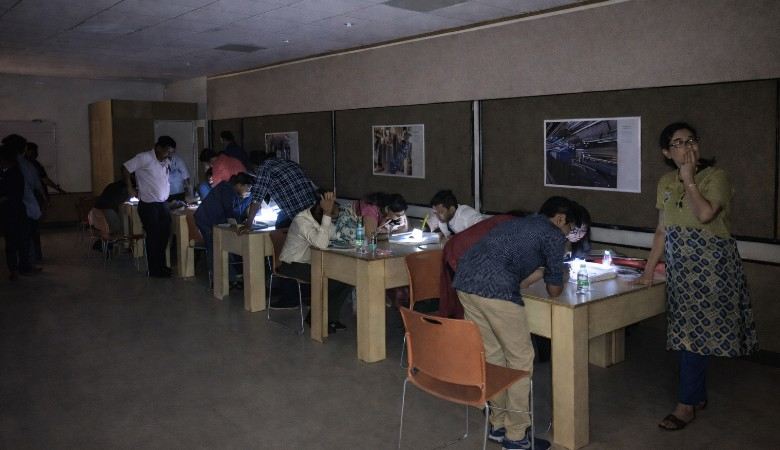
Through interactive online sessions, real research data and interaction with leading scientists, students explore fundamental questions about matter, energy and the universe — experiencing how science is actually investigated.

The programme is a collaborative initiative of LifeLab Education & Research Foundation and QuarkNet, created to make advanced scientific learning accessible to young learners.

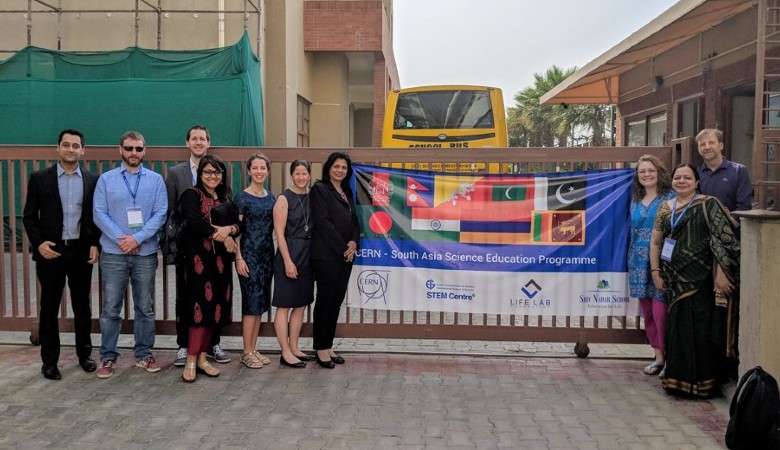
Adieu Mick Storr! Thanks for getting us started!

Core Objective

Mission

To connect students and educators across South Asia with authentic experiential learning in frontier science & technology, fostering curiosity, scientific thinking, collaboration and the confidence to participate in real-world innovation & discovery.

Long-term Impact

Vision

A future where every young learner in India can access frontier science, think critically, collaborate globally and contribute to the scientific discoveries and innovations that shape tomorrow.

The QuarkNet Learning Difference

Students do not just learn about science. They experience how science is actually done.

From classroom concepts to real scientific thinking.

QuarkNet India gives students opportunities to:

Explore Real Research

Engage with authentic scientific questions, data and research practices.

Think Like Scientists

Observe, question, analyse evidence, test ideas and draw reasoned conclusions.

Learn Through Discovery

Move beyond textbook answers to inquiry, experimentation and problem-solving.

Connect With the Scientific World

Interact with scientists, educators, institutions and peers beyond the traditional classroom.

Build Future-Ready Skills

Develop critical thinking, collaboration, analytical ability, curiosity and scientific confidence.

Not just learning science.

Learning to think, question and discover like a scientist.

ELIGIBILITY

Who Can Participate?

Junior Tier

JUNIOR
  • Students from Grades 8 to 12
  • Undergraduate Science & Engineering students
  • Teachers and Researchers of Science and Engineering
  • Schools & STEM-focused academies

Senior Tier

SENIOR
  • Postgraduate & Research PhD students
  • Faculty members and STEM educators
  • National Institutes
  • Technology & Higher Education bodies
01

STUDENTS

Explore real scientific questions, analyse authentic data, and experience research-led learning beyond textbooks.

02

EDUCATORS

Bring inquiry, scientific thinking and research practices into the classroom through deeper engagement with frontier science.

03

INSTITUTIONS

Build a stronger STEM ecosystem by connecting learners and educators with research, scientists and global scientific communities.

This structure creates a vibrant learning network that grows from school classrooms to advanced academic environments.

Program Highlights

Discover a hands-on STEM journey connecting classrooms with real particle physics, global scientists, research mentorship, international exposure, and opportunities that ignite curiosity and future careers.

QN Data Masterclasses

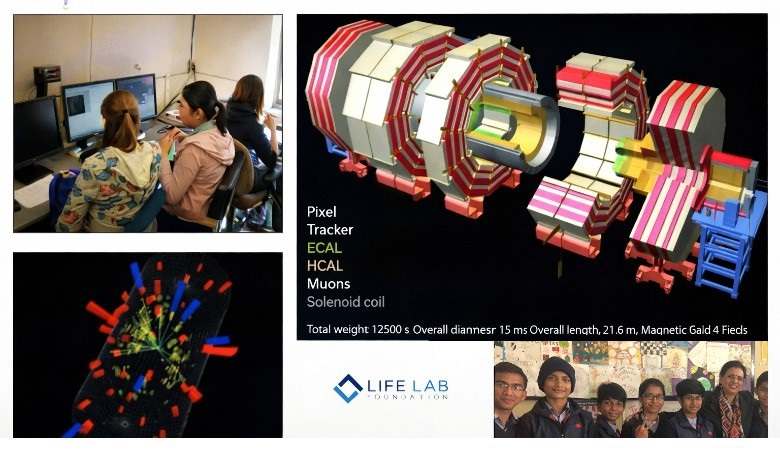
Real data from CERN’s ATLAS and CMS experiments explored and analysed by students.

QN Teacher Training Workshops

QuarkNet-led pedagogical training designed to bring research-led learning into the classroom.

QN Global Webinars

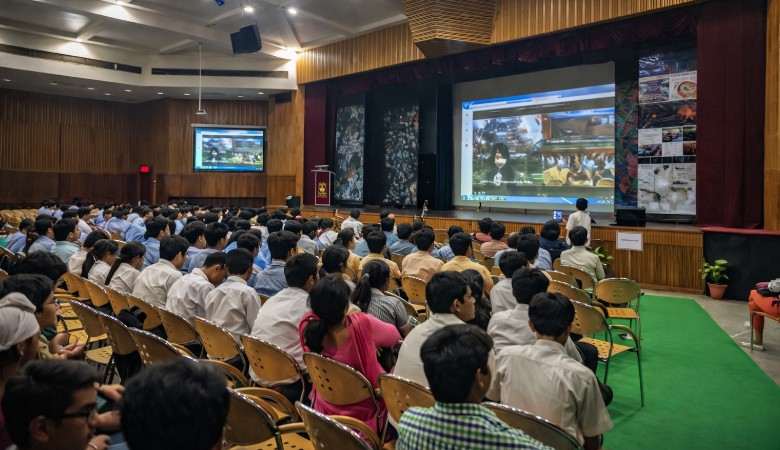
Interactive sessions with scientists from CERN, Fermilab and leading institutions.

QN Research Projects

Student–teacher teams develop guided research projects and scientific investigations.

QN Exchange Visits

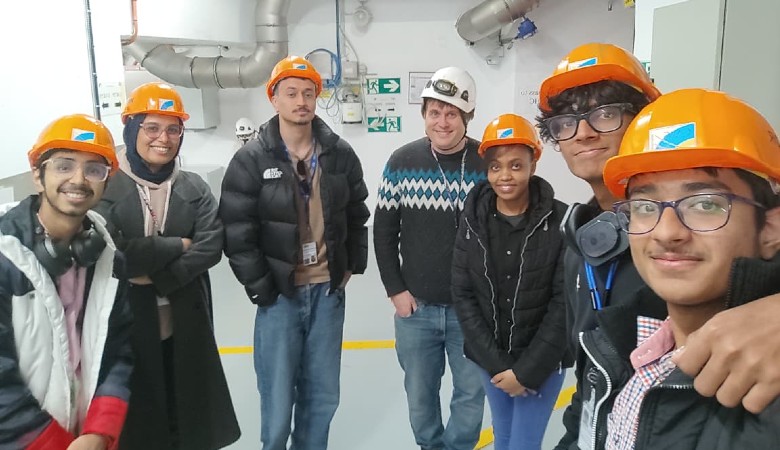
Select participants visit CERN and partner laboratories.

QN STEM Showcase

National event celebrating innovation and scientific creativity.

Welcome to LifeLab QuarkNet India

Where Curiosity Meets the Universe

Ever wondered what happens inside CERN’s giant particle accelerators? What if you could use real data from the universe’s smallest particles to make discoveries of your own?

LifeLab QuarkNet India brings that experience closer — giving learners the opportunity to question, investigate, analyse and discover as part of a real scientific learning journey.

How the Programme Works

  1. Step 1

    Register online.

  2. Step 2

    Receive programme access and session information.

  3. Step 3

    Attend live interactive sessions.

  4. Step 4

    Explore and analyze authentic scientific datasets.

  5. Step 5

    Collaborate with mentors and fellow participants.

  6. Step 6

    Complete the programme and receive certification.

SESSION DATES & TIME

Season 3 Schedule

Six guided learning sessions spread across a focused 3–4 month programme.

Session Calendar

October 2026 → January 2027

02
23 October
Session 2 2026
7–8 PM IST
03
13 November
Session 3 2026
7–8 PM IST
04
27 November
Session 4 2026
7–8 PM IST
05
11 December
Session 5 2026
7–8 PM IST
06
22 January
Session 6 2027
7–8 PM IST

For the latest calendar and schedule, refer to the official programme announcements.

Curriculum Focus

Learning Outcomes

Participants will develop:

  1. I
    Scientific inquiry skills
  2. II
    Critical thinking
  3. III
    Problem-solving abilities
  4. IV
    Data analysis techniques
  5. V
    Coding and computational thinking
  6. VI
    Teamwork and collaboration
  7. VII
    Research methodology
PARTICIPANTS GAIN

PROGRAMME BENEFITS

01

Exposure to modern particle physics

02

Hands-on research experience

03

Interaction with world-renowned experts

04

Global STEM networking opportunities

05

Research and data analysis experience

06

Enhanced university application profiles

07

Awareness of STEM career opportunities

08

Programme certification and recognition

QuarkNet India

Fee Structure

For Students of Grades 8–12

Registrations Within India

01

Individual Registration

₹500

per student

02

Group Registration

₹1,000

for a group of four students

03

Institutional Registration

₹10,000

for one section of up to 30 students

04

College Student - Learner & Mentor

₹1,000

per student

International Registrations

05

For Students of Grades 8–12 Individual Registration

International Student US$15

per student

06

For Students of Grades 8–12 Group Registration

International Students US$30

for a group of four students

07

For Students of Grades 8–12 Institutional Registration

International Institution US$300

for one section of up to 30 students

08

College Student - Learner & Mentor

International US$30

per student

Participation Note

Institutional registration offers schools the opportunity to enrol an entire section at a subsidised per-student rate, while the Learner & Mentor category enables college students to participate both as learners and as mentors.

Life Lab Foundation · QuarkNet India

Complete Your QuarkNet India Registration

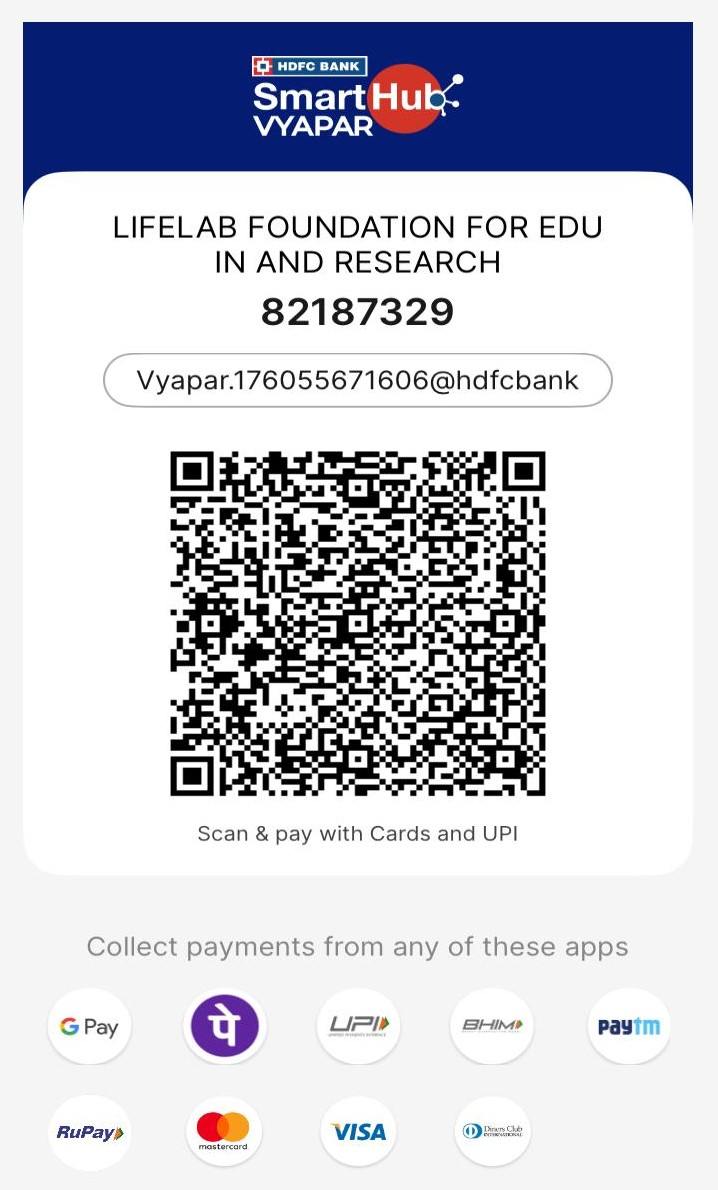
Please scan the QR code to deposit your registration fee. For manual transfers, NEFT, RTGS, or Cheque payments, please use the verified bank details provided.

Secure Payment

Scan & Pay

HDFC Bank payment QR code for LifeLab Foundation

UPI: Vyapar.176055671606@hdfcbank

Account Name LIFELAB FOUNDATION FOR EDU IN & RESEARCH
Account Number 50200117041522
RTGS / NEFT IFSC HDFC0000093
Account Type Current Account
Institution & Branch HDFC Bank Ltd. 5 - R/2, Badshah Khan Chowk, N.I.T., Faridabad – 121001, Haryana

After making the payment: Keep your transaction details and payment receipt ready before completing the Registration & Payment Confirmation form below.

Life Lab Foundation · QuarkNet India

Registration & Payment Confirmation

Complete this form after making the programme payment. Please provide one primary email address for all registration communication.

Before you begin:

Keep your transaction details and payment receipt ready. For group, institutional or multiple-participant registrations, upload the additional participant information as a Word or PDF document.

QuarkNet India

Our Leadership Team

Meet the educators, scientists and programme leaders driving QuarkNet India—working together to inspire curiosity, strengthen STEM education, and connect classrooms with the frontiers of modern physics.

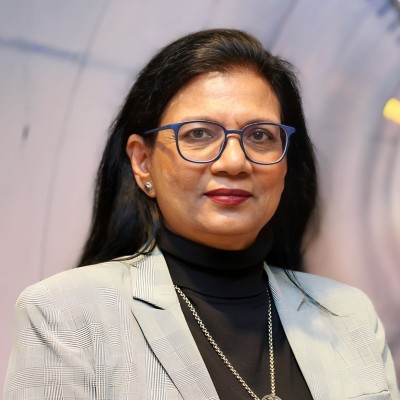
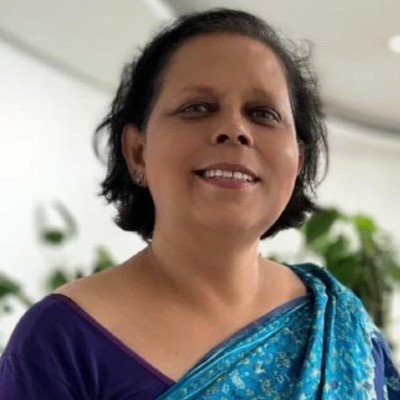
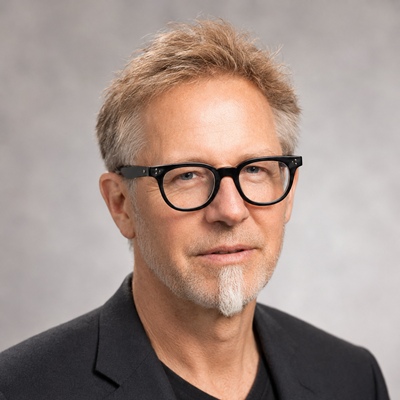
Dr. Archana Sharma

Dr. Archana Sharma

Programme Director

  • Senior CERN Scientist
  • International STEM Leader
  • Science Educator
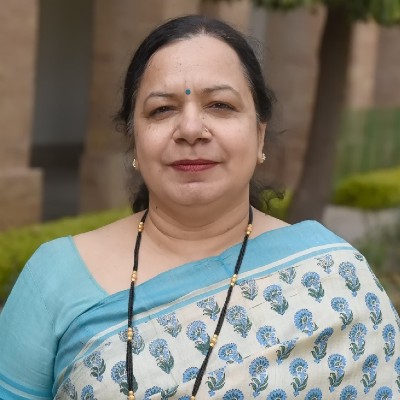
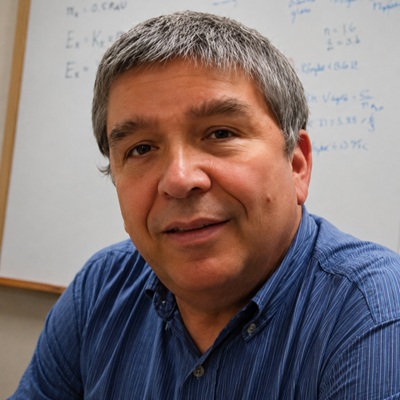
Ms. Vinita Sharat

Ms. Vinita Sharat

Programme Manager

  • Programme Operations
  • Teacher Engagement
  • Outreach
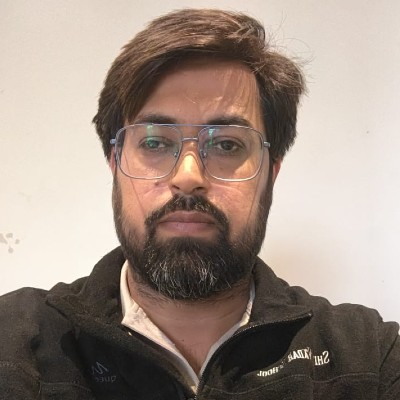
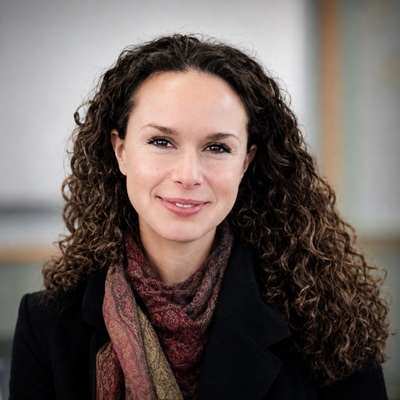
Mr. Manoj Kathuria

Mr. Manoj Kathuria

Programme Coordinator

  • Student Programmes
  • Digital Learning
  • Event Coordination
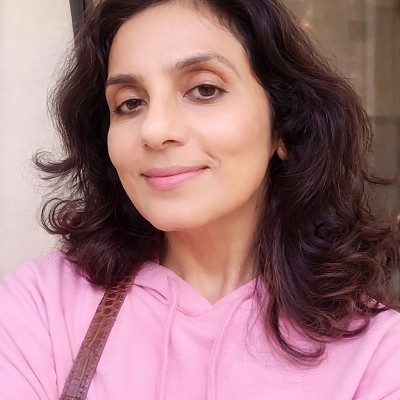
Ms. Niharika Kulshreshtha

Ms. Niharika Kulshreshtha

Academic Advisor

  • Curriculum Development
  • Teacher Training
  • Academic Strategy
Academic Governance

Sr. Advisory Members

Distinguished particle physicists and scientific directors providing international leadership and research direction for QuarkNet India.

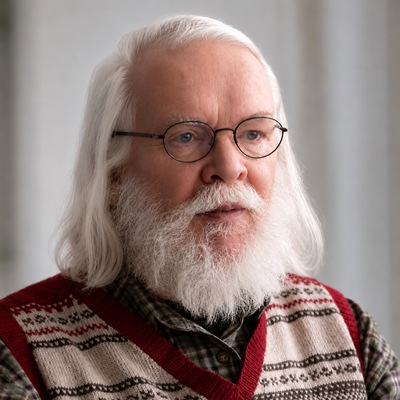
John Ellis
Sr. Advisory Member

John Ellis

Clerk Maxwell Professor of Theoretical Physics, King's College London & CERN

London, United Kingdom
Michael Doser
Sr. Advisory Member

Michael Doser

Senior Research Physicist, CERN

Geneva, Switzerland
Kenneth Cecire
Sr. Advisory Member

Kenneth Cecire

QuarkNet National Staff & Science Educator, University of Notre Dame

Indiana, United States
Kate Shaw
Sr. Advisory Member

Kate Shaw

Associate Professor Experimental Physics Physics Without Frontiers ICTP, Trieste, University of Sussex, UK & CERN

Brighton, United Kingdom
QuarkNet India

Advisory Members

QuarkNet India

Frequently
Asked Questions

Answers about QuarkNet India, programme activities, participation, technical requirements, and how schools, teachers, and students can engage with the initiative.

11 Questions 04 Categories
01 General Information
02 Programmes & Activities
03 Eligibility & Participation
04 Costs & Support
01

General Information

01 What is QuarkNet India?

QuarkNet India is a physics outreach and professional development initiative developed through collaboration between the Life Lab Foundation, QuarkNet US, and the international particle physics community, including scientists associated with CERN .

The programme connects Indian high school physics teachers and students with scientists and research-based learning opportunities, enabling them to explore particle physics, astrophysics, cosmic rays, data analysis, and modern scientific research using real experimental data.

02 Who organizes and leads QuarkNet India?

QuarkNet India is coordinated by the Life Lab Foundation , under the leadership and guidance of Dr. Archana Sharma , with support and mentorship from experts associated with QuarkNet US and CERN.

03 What are the main objectives of QuarkNet India?

The programme focuses on three key objectives:

Educator Empowerment Provide physics teachers with professional development, modern pedagogical tools, hands-on activities, and resources that help bring contemporary physics into the classroom.
Student Engagement Give students opportunities to experience authentic scientific inquiry and work with real research data from major scientific experiments and institutions.
Global Science Connection Create stronger links between Indian classrooms and the international scientific community, giving students and educators greater exposure to contemporary research and scientific thinking.
02

Programmes & Activities

04 What kind of data do students and teachers analyse?

Depending on the programme or activity, participants may work with real or research-based datasets from areas such as:

CERN Large Hadron Collider Experiments Event-display data associated with experiments such as ATLAS and CMS, where participants can explore particle collision events and identify signatures associated with particles such as W bosons, Z bosons, and Higgs boson candidates.
Cosmic Ray Data Measurements from cosmic-ray detectors, including activities involving the observation and analysis of cosmic muons.
Gravitational-Wave Data Introductory data-analysis activities connected with gravitational-wave research and experiments such as LIGO.
05 What kinds of activities are conducted under QuarkNet India?

Activities may include:

  • Student Masterclasses
  • Teacher professional-development programmes
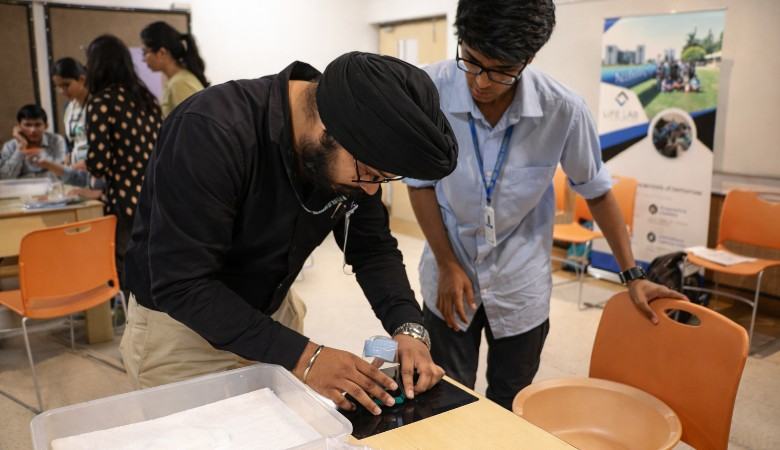
  • Hands-on physics workshops
  • Real-data analysis activities
  • Scientist interaction sessions
  • Collaborative learning sessions
  • Research-oriented projects and demonstrations
  • Online and in-person learning programmes

Specific activities may vary depending on the programme cycle and participating institutions.

06 Are there ongoing workshops for teachers?

Yes. QuarkNet India conducts professional-development and collaborative learning opportunities for teachers, which may include virtual sessions, hands-on workshops, mentoring, and discussions with scientists and educators.

Teachers are introduced to QuarkNet learning resources and data activities that can help them incorporate elements of modern physics and scientific inquiry into classroom teaching.

03

Eligibility & Participation

07 Who can participate in QuarkNet India?
Physics Teachers & STEM Educators Senior-secondary and high-school teachers who want to strengthen their understanding of modern physics and adopt more inquiry-based approaches to teaching.
High School Students Students, typically from Grades 9–12 / Standards 9–12, who are interested in physics, astronomy, engineering, scientific research, computing, or data science.
Schools & Educational Institutions Indian schools and educational institutions interested in participating in QuarkNet programmes, hosting Masterclasses, or developing longer-term engagement with the initiative.
08 Is advanced physics knowledge or coding experience required?

No. Participants are not expected to have advanced knowledge of particle physics or programming.

Activities are designed to be accessible at the high-school level and are supported through guided instruction, visualisation tools, structured exercises, and learning resources.

Some activities may use scientific visualisation platforms or data-analysis tools, but participants are guided through their use.

09 What technical setup is required?

For most online workshops, Masterclasses, and virtual sessions, participants generally require:

  • A stable internet connection
  • A desktop or laptop computer
  • An up-to-date web browser such as Chrome, Firefox, Safari, or Edge
  • Standard video-conferencing capabilities
  • Access to any programme-specific online tools or resources shared before the session

Additional requirements, if any, will be communicated for individual activities.

04

Costs & Support

10 Is there a fee to participate in QuarkNet India programmes?

QuarkNet India aims to make its scientific learning opportunities widely accessible to schools, teachers, and students.

Participation fees, if applicable for any specific programme, workshop, institutional engagement, equipment requirement, or special activity, will be communicated clearly in advance.

11 How can my institution get involved or register for upcoming programmes?

Schools, teachers, and educational institutions interested in QuarkNet India can register their interest through the Life Lab Foundation / QuarkNet India programme page.

Depending on the opportunity, schools may be invited to:

  • Register teachers or student groups
  • Participate in upcoming Masterclasses or workshops
  • Host QuarkNet activities
  • Join educator-development programmes
  • Explore longer-term institutional collaboration

Programme announcements, schedules, and registration information will be shared through the official QuarkNet India communication channels.

Movement

Join the Movement

Let Classrooms Become Research Spaces

01. Discovery

Let your classroom become a place of exploration, questioning, and discovery through active inquiry.

02. Dialogue

Let students learn from real data, dialogue, and the spirit of genuine scientific inquiry.

03. Impact

Let teachers become facilitators of global thinking, building stronger pathways to science education.

Together, let us inspire a culture of curiosity and help shape India’s future as a land of discovery.

Join Us Now